 Scoliosis is often thought of as a condition that affects teenagers, but it can develop at almost any stage of life. From children to older adults, the way scoliosis presents and is managed can look very different. Understanding those differences helps families make more informed decisions about care.
Many people are surprised to learn that scoliosis is actually more common in older adults than in adolescents. Research suggests that over 30% of adults over age 65 develop what is known as de novo scoliosis, which is related to spinal degeneration. In comparison, about 2 to 4% of adolescents develop idiopathic scoliosis. These numbers highlight why age plays such an important role in both detection and treatment planning.
How Symptoms and Progression Differ
In children and adolescents, scoliosis often begins without pain. Instead, it shows up as subtle postural changes. Parents might notice uneven shoulders, a difference in waist shape, a prominent shoulder blade, or a rib hump that becomes more visible during a forward bend test. Because the spine is still growing, curves may progress more quickly during these years, which makes regular monitoring especially important.
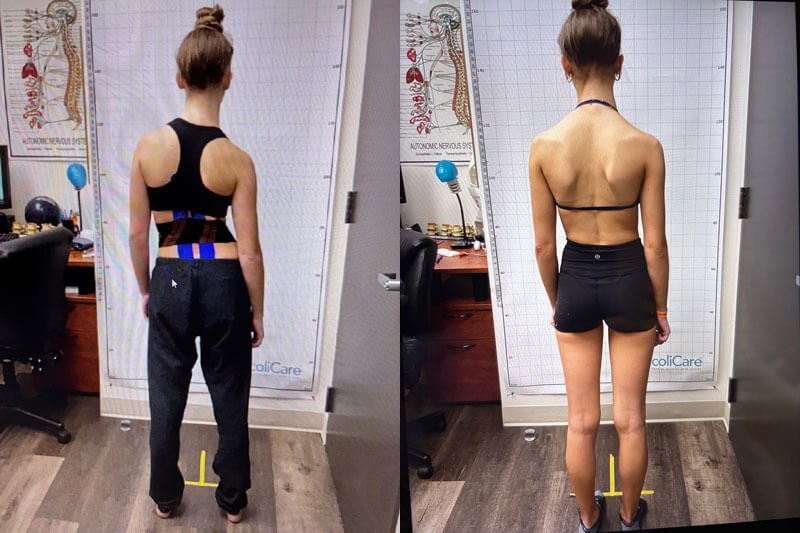 Before (Left) and After (Right)
Adults tend to experience scoliosis differently. Those who had scoliosis earlier in life may see gradual progression over time, particularly if curves are larger than 30 degrees. In some cases, curves can increase by about half a degree to two degrees per year. Adults who develop scoliosis later in life often report stiffness, reduced mobility, and ongoing discomfort as their main concerns.
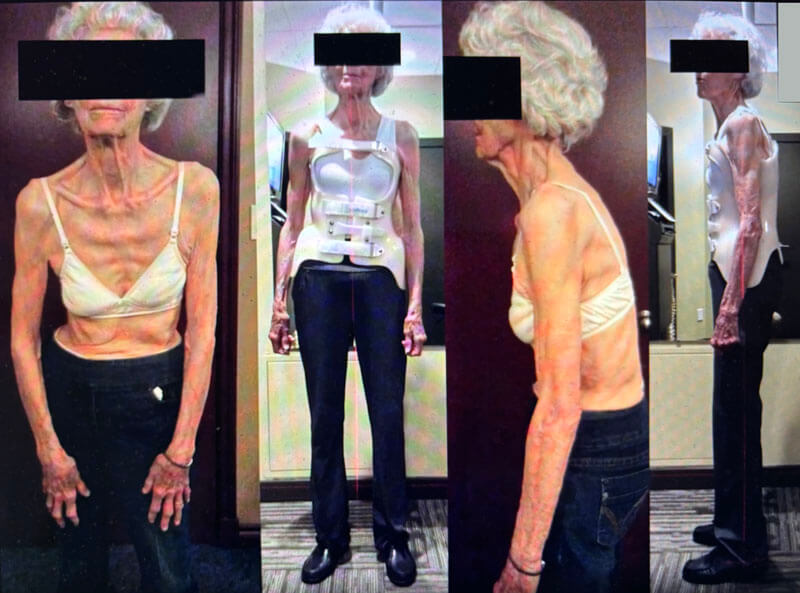 Front Before and After (Left) and Profile Before and After (Right)
Treatment Goals by Age Group
Treatment approaches are shaped by the stage of life and the goals of care. For kids and adolescents at Barrhaven Family Chiropractic, the focus is on improving spinal alignment, enhancing postural balance, and reducing the risk of progression. Care may include scoliosis-specific exercise programs that draw from approaches such as SEAS, Schroth, and CBP®, along with customized bracing like ScoliBrace. During growth, there may be an opportunity to influence how the spine develops.
For adults, care typically focuses on managing symptoms and supporting spinal stability. Many adults aim to reduce pain, maintain mobility, and slow further progression. Improvements in posture and function are often possible, although structural correction may be more limited compared to younger patients.
“Early detection changes everything. When we catch a curve while it’s still small, we have far more options and far better outcomes. That’s why I encourage families to get their children checked, even when nothing seems wrong yet.”
Dr. Kahlid Mankal, Barrhaven Chiropractor
Why Early Detection Matters
Early detection is one of the most important factors in managing scoliosis. Identifying a curve while it’s still mild allows for closer monitoring and, when appropriate, early intervention. Parents can watch for signs such as uneven shoulders, asymmetry in the waist, or changes in how clothing fits. A simple forward bend test can sometimes reveal differences in the rib cage.
Scoliosis can continue to change over time, even into adulthood, especially when curves are more pronounced. Taking action early can help reduce the likelihood of more significant progression later on. If you’re noticing any of these signs, a professional assessment can help clarify what’s happening and guide next steps.